
Can You Fax Your Tax Return to the IRS?
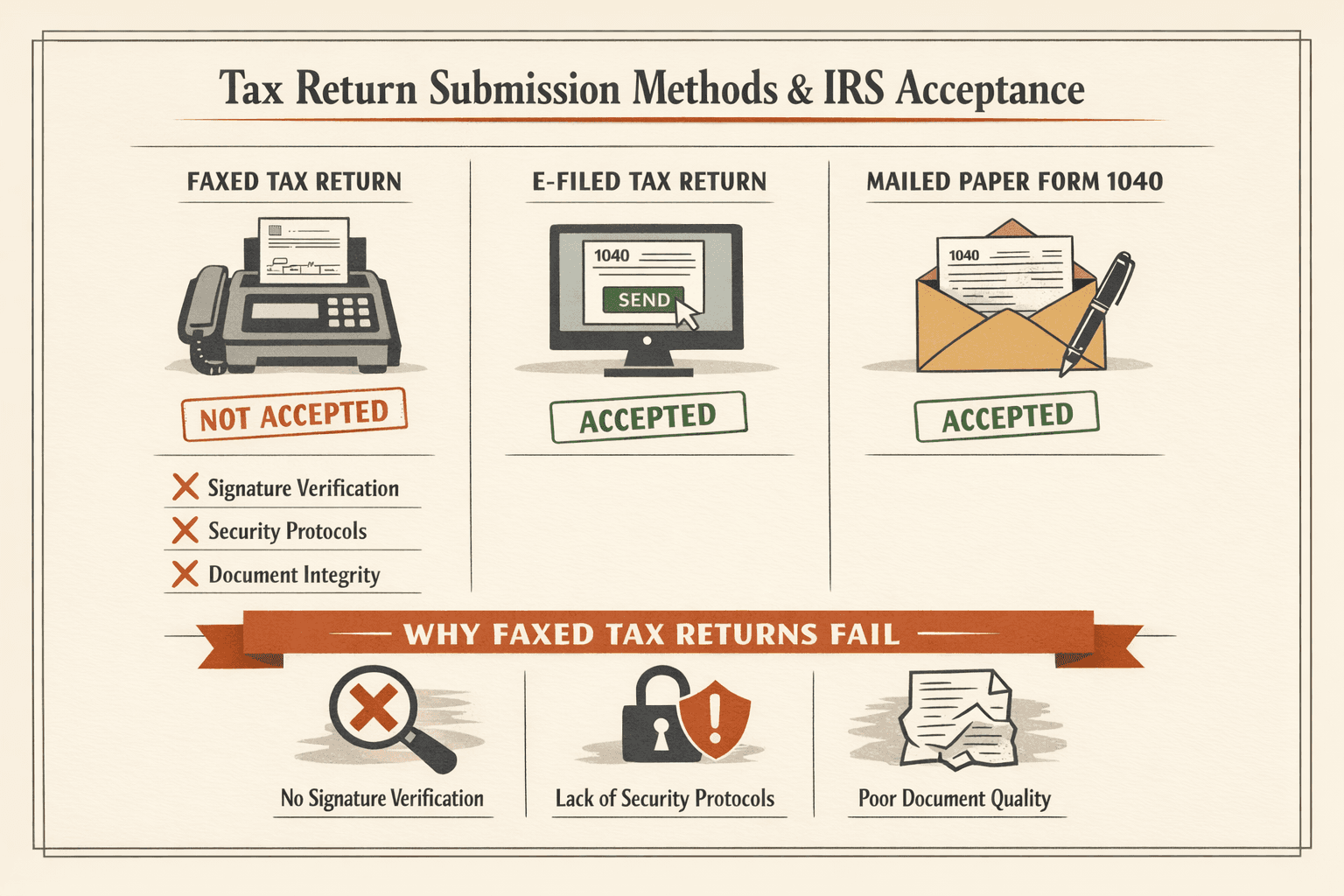
The IRS doesn't accept faxed tax returns—you must e-file or mail Form 1040. E-filing gives you confirmation within 24 hours; paper mail takes weeks.
Quick Verdict
No, you cannot fax your tax return to the IRS. The IRS does not accept Form 1040 or any other individual tax returns via fax. You must either e-file your return or mail it to the appropriate IRS address for your state and filing situation.
Why the IRS Does Not Accept Faxed Tax Returns
The IRS requires either an original signed paper return or an authenticated electronic submission. Faxed documents don’t meet the signature and security protocols the IRS uses to verify taxpayer identity and prevent fraud. The agency’s processing systems are built around structured electronic data and original paper documents—not faxed copies. E-filing provides real-time validation and immediate confirmation, while paper mail preserves the original signature and document integrity that fax transmission can’t guarantee.
How to Submit Your Tax Return to the IRS (Approved Methods)
The IRS accepts tax returns through three official channels: e-filing, mailing a paper return, or filing through a tax professional.
E-File Your Tax Return
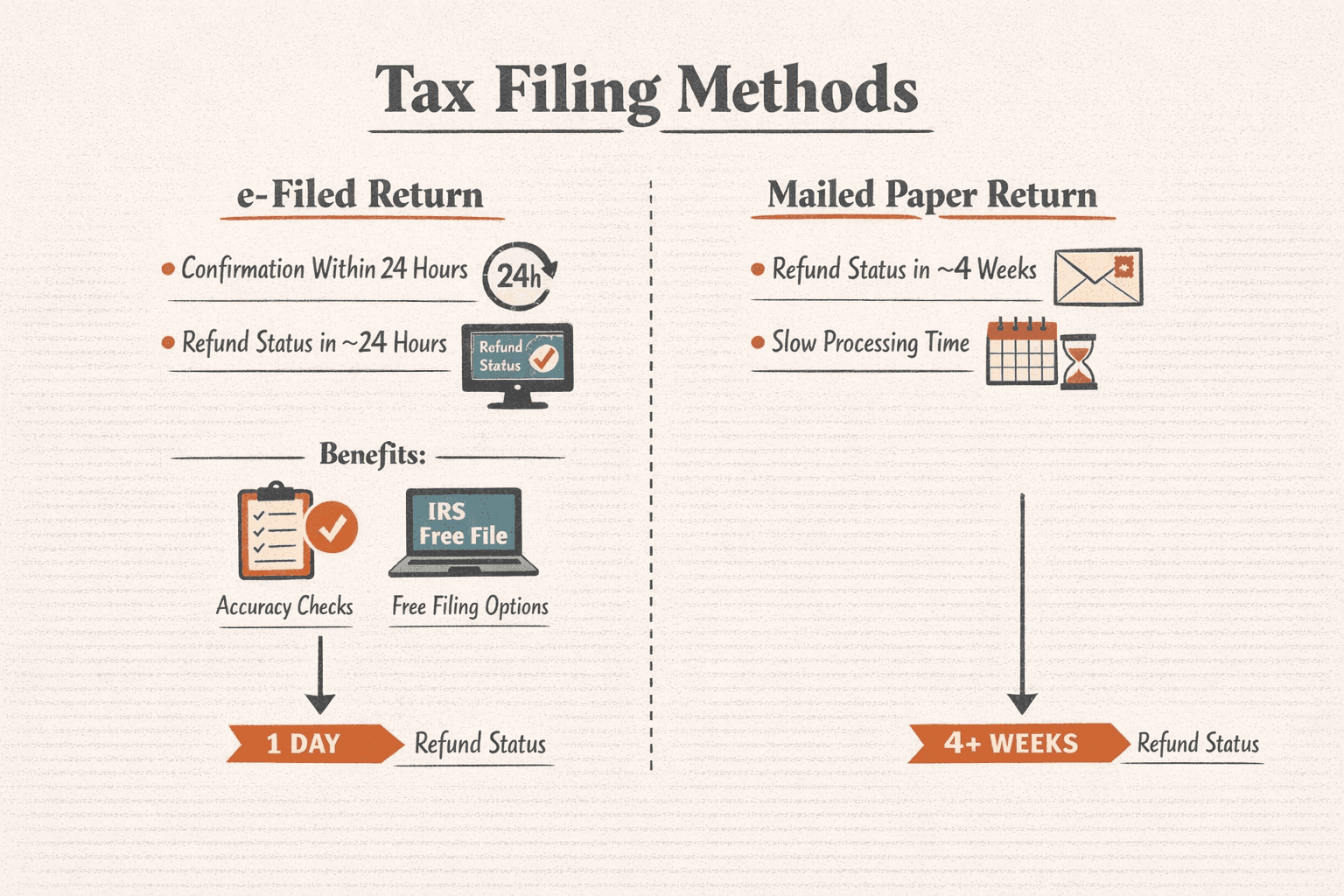
E-filing is the fastest and most secure way to submit your return. The IRS processes electronic returns immediately and sends confirmation within 24 hours.
Benefits of e-filing:
- Immediate confirmation — You’ll know within 24 hours if your return was accepted or rejected
- Faster refunds — Refund status appears around 24 hours after submission, versus 4 weeks for paper returns
- Built-in accuracy checks — Tax software catches common errors before you submit
- Free options available — IRS Free File gives you no-cost filing through approved software providers
You can e-file through IRS Free File, commercial tax software like TurboTax or H&R Block, or a tax professional.
Mail Your Tax Return
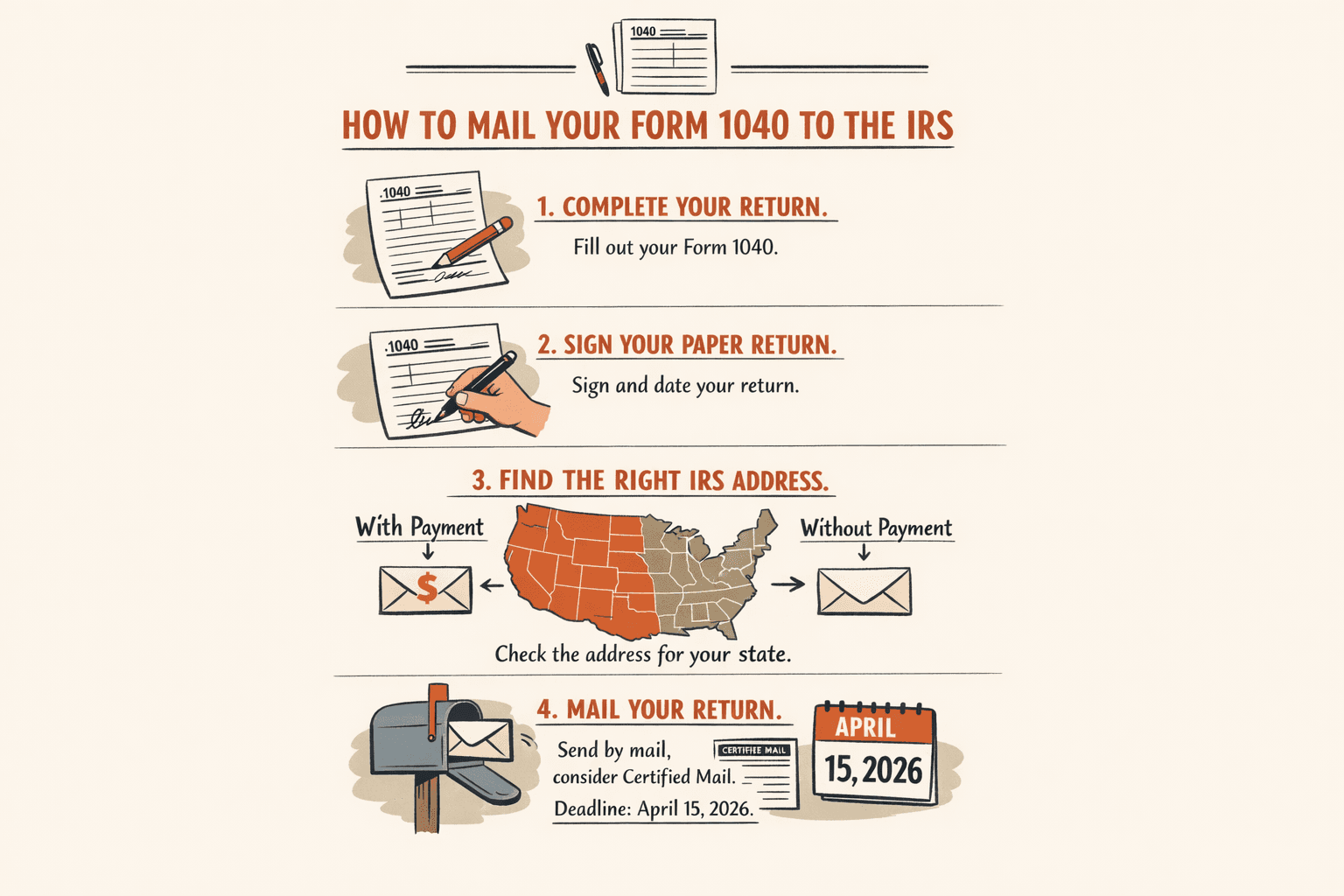
If you can’t e-file, you can mail a paper Form 1040 to the IRS. This takes longer but remains a fully accepted filing method.
Key mailing requirements:
- Use the correct IRS address — Addresses vary by state, return type, and whether you’re including a payment
- Sign your return — Unsigned returns will be rejected and sent back
- Consider certified mail — Gives you proof of mailing and delivery
- Mail by the deadline — For 2025 returns, that’s April 15, 2026
Find your correct mailing address here—it changes based on where you live and what you’re filing.
File Through a Tax Professional
A tax professional can e-file on your behalf or help you prepare a paper return if needed. They’ll handle the submission process and make sure you’re using the right filing method for your situation. This is especially useful if you have a complex return or need advice on whether e-filing or paper filing makes more sense.
What to Do If You Need Fast Confirmation
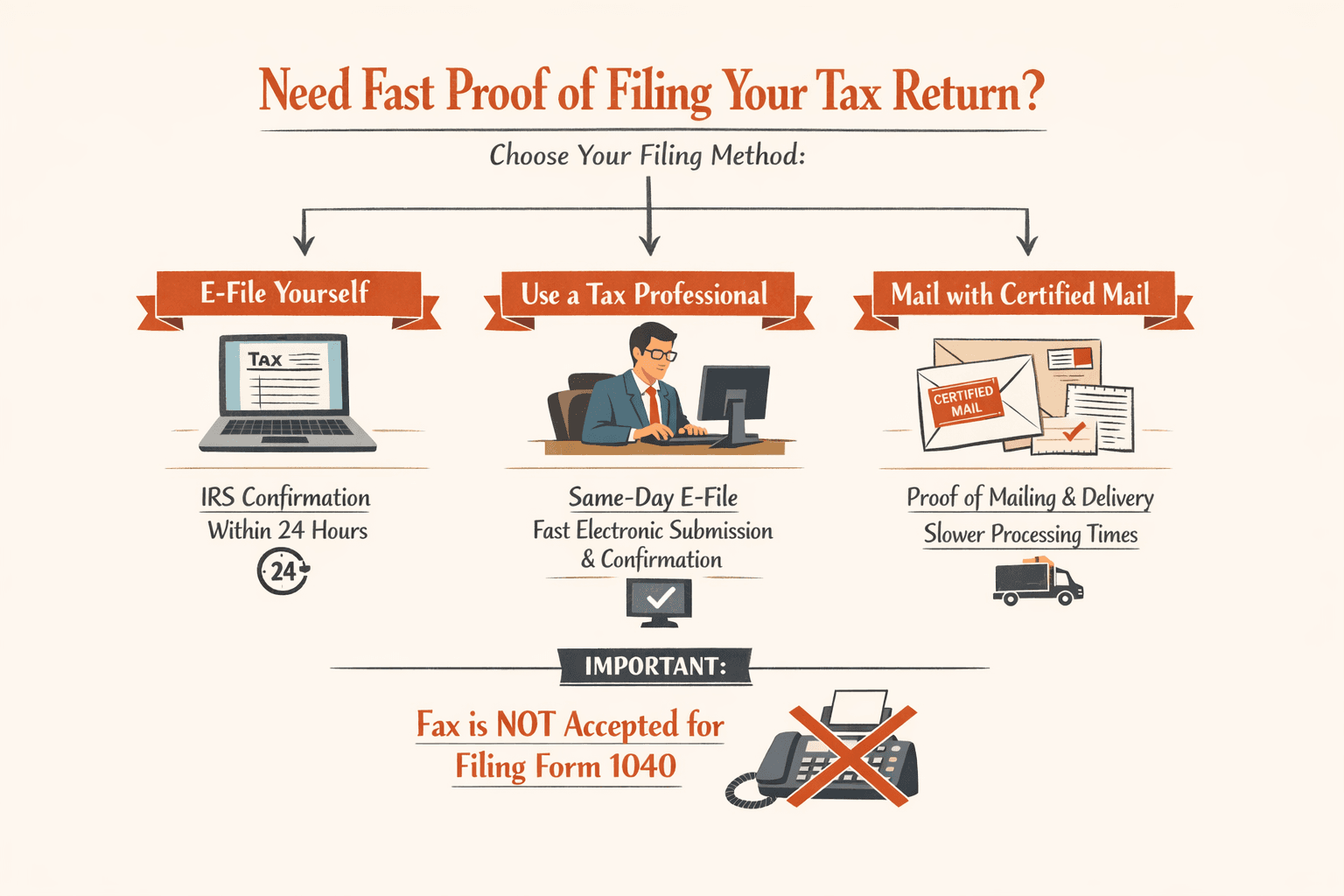
If you’re considering fax because you need proof your return was filed on time, e-filing is your best option:
- E-file with immediate confirmation — The IRS confirms receipt within 24 hours
- Use certified mail with tracking — Costs a few dollars but gives you legal proof of delivery if you must mail
- Same-day e-file through a preparer — Many tax professionals offer same-day electronic filing, even close to the deadline
E-filing gives you the fastest confirmation—much faster than any paper-based method could.
FAQ
Can I fax my 1040 to the IRS?
No. The IRS does not accept Form 1040 via fax. You must e-file your return electronically or mail it to the appropriate IRS processing center.
Can you fax a tax return to the IRS?
No. The IRS does not accept tax returns by fax from any taxpayer. The policy exists because fax transmission doesn’t meet IRS signature verification and data security requirements. You must either e-file or mail your return.

Written by
Bernard Bado
I created ThirtyFax after needing to send a single fax and refusing to pay for a monthly subscription to do it. I write here about faxing, document workflows, and the surprisingly stubborn role fax still plays in modern business.
View author profile